
Allegany County Bench Warrants
Bench warrants in Allegany County are issued by judges in both the Circuit Court and District Court when a person fails to appear for a scheduled hearing or violates a court order. This western Maryland county, with its seat in Cumberland, handles all warrant matters through the local sheriff and the clerk of court offices. Allegany County does not maintain a public online warrant database, so most warrant checks require a phone call or an in-person visit. The sheriff can be reached at 301-777-1585, and the Circuit Court Clerk office is available at 301-777-5923 for case-related questions.
Allegany County Overview
How Allegany County Bench Warrants Work
A bench warrant in Allegany County is a direct order from a judge. It tells law enforcement to bring someone to court. The most common reason is a failure to appear. When a person misses a court date, the judge can issue a bench warrant right from the bench that same day. This applies to both criminal and civil matters, though it happens more often on the criminal side. Once the warrant is active, it stays on file until the judge recalls it or the person is taken into custody. There is no set time limit.
Bench warrants here can also come from probation violations. If someone on probation skips a check-in or fails a drug test, the supervising officer may ask the court to issue a warrant. The same goes for not paying court-ordered fines or not finishing community service. The judge has wide power to issue these warrants for any kind of noncompliance with a court order. In Maryland, a failure to appear is treated as a new criminal offense under state law, which means the person could face extra charges on top of the original case.
Allegany County sits in the 1st Judicial Circuit. The Circuit Court handles more serious cases, while the District Court deals with smaller matters and traffic cases. Both courts can issue bench warrants. The Allegany County Sheriff is the main agency that serves and enforces these warrants within county lines.
Searching for Bench Warrants in Allegany County
Allegany County does not post warrants online. There is no county-run database where you can look up active bench warrants. This is different from some other Maryland counties like Anne Arundel, which keeps a downloadable list. If you need to check on a warrant in Allegany County, you have a few options. You can call the sheriff at 301-777-1585. You can also visit the Allegany County Sheriff office in person at the courthouse in Cumberland. Staff there can tell you if a warrant exists for a specific person, though they may have limits on what they share over the phone.
The Maryland Judiciary Case Search is another way to check. This free statewide tool lets you search by name or case number. It covers all Circuit and District Court cases in Allegany County. You can see case status, docket entries, and notes about bench warrants. The system will often show entries like "bench warrant issued" or "failure to appear" in the case history. It does not show a simple list of active warrants, but you can piece the information together from the case records.
The screenshot below shows the Maryland Judiciary Case Search portal that covers Allegany County court records.
This statewide database is free and open to all. It covers both District and Circuit Court cases filed in Allegany County.
Note: Case Search may not show all records, as some dismissed and expunged cases have been removed from public view.
Allegany County Court Clerk and Bench Warrants
The Allegany County Circuit Court Clerk office plays a key role in the bench warrant process. When a judge issues a bench warrant, the clerk records it in the case file and enters it into the court system. The clerk office is where you go to pull case files, check on docket entries, and get copies of court documents. You can reach them at 301-777-5923. They are located in the Allegany County Courthouse at 30 Washington Street in Cumberland.
The clerk can confirm if a bench warrant is on file for a given case. They can also provide copies of the warrant itself, though you may need to pay a small fee for document copies. Keep in mind that the clerk office handles the paperwork side. They do not serve or enforce warrants. That is the sheriff's job. If you want to turn yourself in on a bench warrant, you would go through the sheriff, not the clerk.
Below is a look at the Allegany County Circuit Court Clerk portal where case records are managed.

The clerk office is the main point of contact for all court documents, including bench warrant paperwork and case files.
Criminal Records and Allegany County Warrants
Bench warrants in Allegany County tie directly into the criminal records system. When a warrant is issued, it gets entered into the Maryland court database and can also be flagged in the National Crime Information Center system. This means that a bench warrant from Allegany County can show up during a traffic stop anywhere in the state, or even in another state if it has been entered into the national system. Law enforcement officers run warrant checks as part of routine stops and interactions.
The Allegany County criminal records section of the court system tracks all criminal case activity, including bench warrants. If a case has a bench warrant tied to it, that information shows in the docket. You can access some of this through the statewide Case Search tool, but the most complete records are at the courthouse. In-person record searches at the clerk office will give you the full picture of a case, including all warrants past and present.
Here is the Allegany County criminal records page where warrant-related case data can be found.
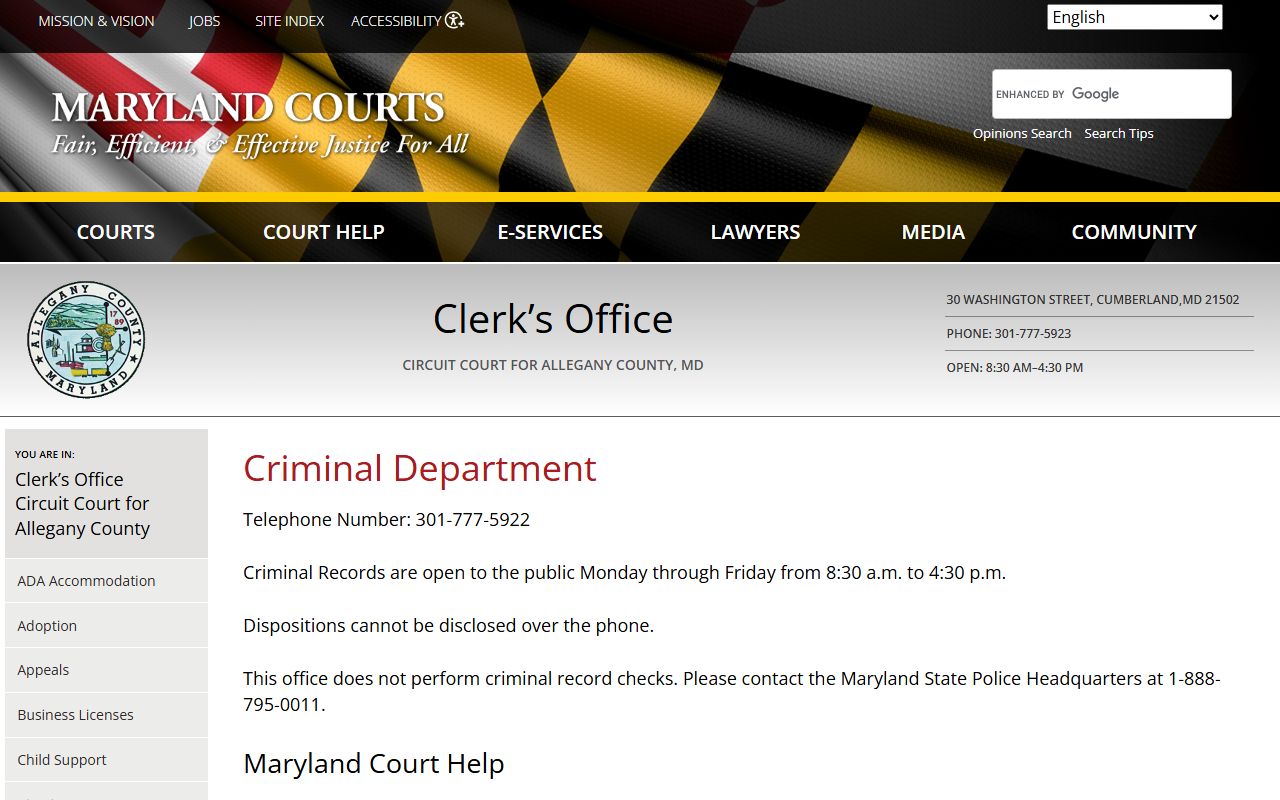
Criminal records searches at the courthouse can turn up both active and past bench warrants tied to a case file.
Note: A bench warrant from Allegany County can follow you across state lines if it has been entered into the NCIC database.
Safe Streets and Drug Court in Allegany County
Allegany County runs a Safe Streets Initiative that works to reduce crime and help people with outstanding warrants resolve their cases. This program has been part of the county's approach to dealing with repeat offenders and people who have fallen through the cracks in the court system. If you have a bench warrant in Allegany County, reaching out through programs like Safe Streets can sometimes help you get back on track without the stress of a surprise arrest.
The county also has a Drug Court program. Drug Court is an alternative for people whose cases involve substance abuse. If a person with a bench warrant qualifies for Drug Court, the judge may recall the warrant and allow them to enter the program instead of going through the standard criminal process. Drug Court involves regular check-ins, drug testing, and treatment sessions. It is not easy, but it can be a better path than sitting in jail on a bench warrant.
For people who want to deal with a bench warrant on their own terms, the best first step is to talk to a lawyer. The Allegany County Bar Association can help connect you with local attorneys. Maryland Legal Aid also serves Allegany County and may be able to help if you cannot afford a private lawyer. Acting on your own before you get picked up by law enforcement almost always leads to a better outcome in court.
What to Do About an Allegany County Bench Warrant
If you think you have a bench warrant in Allegany County, do not ignore it. Warrants do not go away. They stay active until a judge takes action or you are arrested. The longer a warrant sits, the worse it can get. You could be picked up at a traffic stop, at a routine police encounter, or even at the MVA. Maryland has a program that can flag your license if you have outstanding warrants or unpaid court obligations.
- Call the sheriff at 301-777-1585 to confirm the warrant
- Contact a lawyer to discuss your options
- Ask about turning yourself in voluntarily
- Check the Maryland Case Search tool for your case status
- Reach out to Maryland Legal Aid if you need free help
Voluntary surrender usually looks better to a judge. When you show up on your own, it signals that you take the court seriously. Judges have the power to set bail, release you on your own recognizance, or modify the terms of your case. A lawyer can sometimes file a motion to quash the warrant before you even step into court. This is especially common when the failure to appear was due to a misunderstanding or a real emergency. The court has some flexibility, but you have to take the first step.
Nearby Counties
Allegany County sits in the western part of Maryland. These neighboring counties also handle bench warrants through their own courts and sheriff offices.